

Do I want something tender, expressive, or maybe solid? Somehow, one evening, I came across keyboard switch soundtracks.
There is a whole foreign language of industry terms switches self: pin, actuation force, pre-lubricated or not, pins and more. And when you think you’ve come far enough, you discover that instead of buying a ready-made keyboard, you can build your own using all the parts you prefer, and a completely different world opens up to you.
Naturally, there are ardent coffee fans in the keyboard industry, which is why the number of coffee-themed articles ranges from cafe-style keys Down HMX Latte switches (“creamy” sound) to a Center key for craftsmenis amazing. Some companies have gone a step further and created keyboard cafes: part keyboard showroom with related parts/accessories and part specialty café. Just as tattoo parlors, plant shops, and board game stores coexist with coffee shops, keyboard cafes have found commonalities among interests and are using coffee as a conversation starter.
The keyboard community (“keeb” for miniature) is similar to the specialty coffee community in that it is made up of gearheads, enthusiasts, collectors, fans of custom mods, builders (though building your own coffee maker or grinder is not recommended), retailers, and of course, manufacturers.
While one interviewee told me the market was oversaturated, another, with similar reasoning, told me it wasn’t, but was louder and more complicated. Two sides of the same coin. Either way, they both agreed that entering as a newbie is overwhelming.
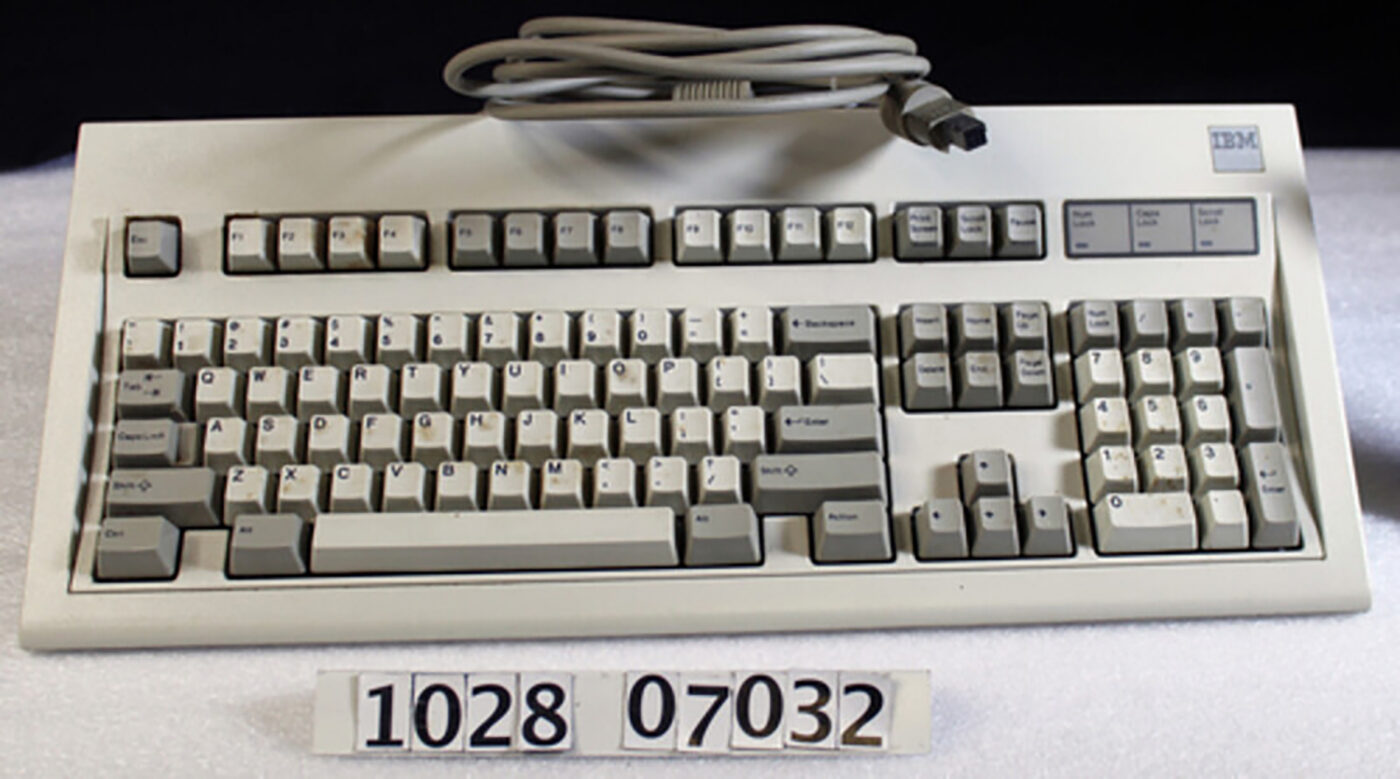
Of the many subcultures I have explored, keyboards are probably the newest. Apparently its history dates back to the typewriter, but the detachable mechanical keyboard of the personal computer became popular with the release of the IBM Model M in 1986. Cherry switches, a brand you may be familiar with if you’ve researched keyboards. The German manufacturer retained the patent on the Cherry MX switch until it expired in 2014, and a flood of fresh manufacturers and switch innovations soon followed. As the Internet and gaming became more popular, mechanical keyboards became preferred due to their precision, reliability and durability. Meanwhile, membrane switches have entered the market – cheaper to produce, lighter, quieter, etc. – and these are probably the ones you have now.
The key (sorry) difference between mechanical and membrane keyboards is how the switches work. All keys on membrane keyboards press on the same surface, while the keys on mechanical keyboards have a metal spring and activation mechanism.
Themed keyboards and related desk accessories are quite common, including unique keycaps, frames, and desk pads. For example, you could have a candy-themed keyboard with glowing pops of color, backlit keys, and artisan keycaps shaped like different candies.
Keo, the artist behind the Etsy shop Keofeltdesigns handcrafted keycaps for aesthetic keyboard users. Artisan keys are three-dimensional, and the novelty keys have a printed illustration. Don’t need or don’t want to exploit the “PgDn” key? Replace it with a 3D resin mug instead with a perfectly placed rosette, which she believes is a bestseller. Keo’s unique keycap offerings are handcrafted and take 1-2 hours to complete. He has one set dedicated to café aesthetics, and he also creates a miniature grinder on request.
Once you start building your own keyboard, the options become endless and, as Erica Teoh notes, overwhelming. Teoh is the co-founder Click and brewa mix of cafe and retail space with keyboards in Penang, Malaysia. The co-existing concept was intended from the beginning so that they could cultivate a culture that values experience and community. “We wanted to create a space where people could sit, build a keyboard, ask questions and have a cup of coffee at the same time,” he explains. “Coffee naturally encourages conversation, and the feeling of comfort makes the hobby more accessible.”
Click & Brew’s keyboard business sells keyboards, switches and accessories, but expands beyond the customary retail model to offer repairs, mods and construction and workshop services. The workshops are designed for beginners and teach you the basics rather than chasing the hype Young Builders one for children (ages 7-14) to learn proper typing. If you’re just starting to explore the hobby, she recommends trying out keyboards in person – this is indispensable for switches – and then go by feel and sound, not brand. When you search for Switch on the Internet, product pages contain audio files and you can find many ASMR videos of people clicking.
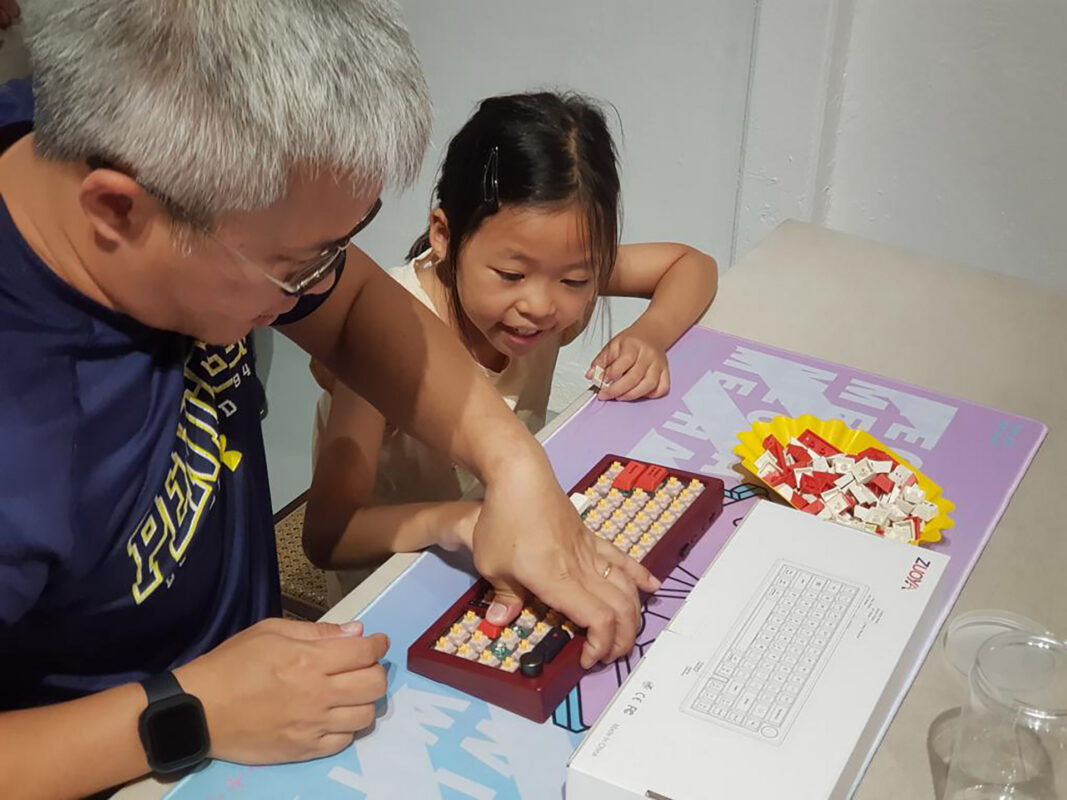
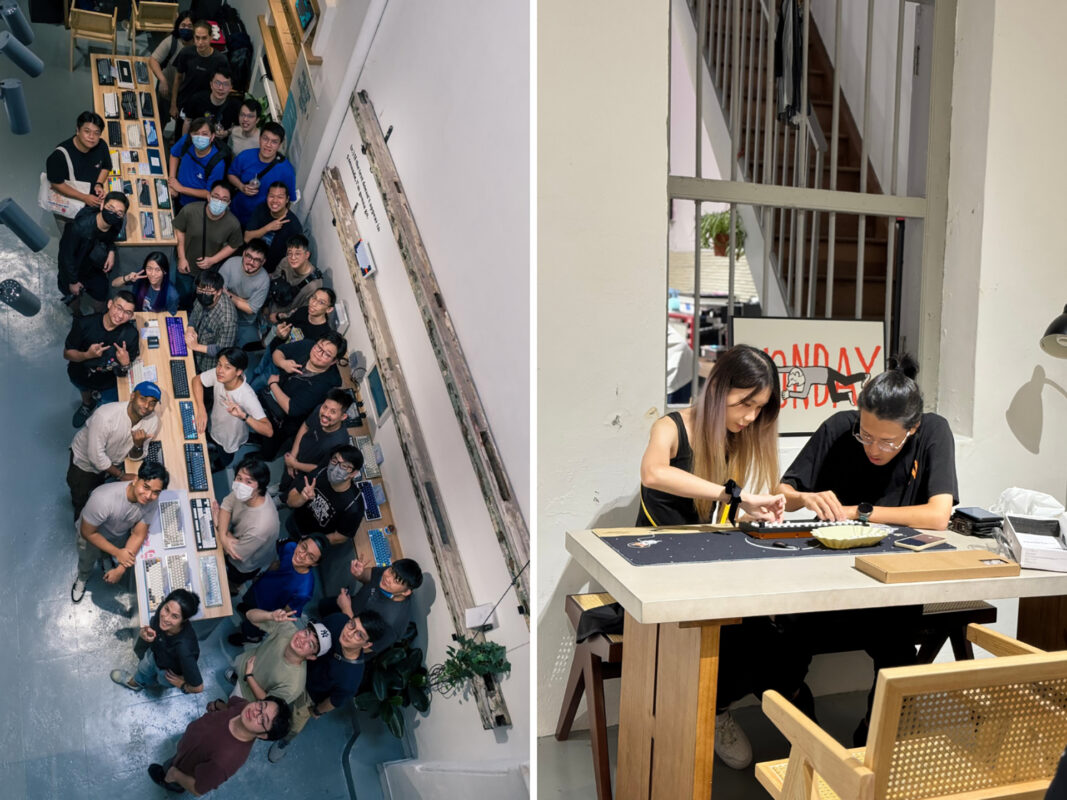
Personal preference dictates your selection of switch touches and sounds, as does the layout of your build. Perhaps fortunately for newcomers, these arrangements are most often described in percentages, with 100% being the customary layout with everything: function row, navigation, numeric keypads, etc. An 80% or Tenkeyless (TKL) layout removes the numeric keypad, and the percentages decrease as more sections are removed. AND 40% arrangement. it is extremely minimalist and stores only the most critical keys. And then there are more choices in case, angle, keycaps… no wonder people get overwhelmed.
“What keeps us in the keeb culture is its deep focus on community and knowledge sharing,” says Teoh. “When people spend time in a place, they realize that both coffee keyboards and mechanical keyboards share similar values – craftsmanship, attention to detail and personalization.”
Keyboard enthusiast and designer Chelsea Chen she got into this hobby in 2020 after her MacBook The keyboard with the butterfly switch broke down and the “B” key stopped working. When I interviewed her, she was involved in neurological research, but by coincidence she also took a part-time job as a barista.
Her first mechanical keyboard was factory-built Birdie 65% (without numeric keypad, navigation and functions, and F-row keys), with Cherry MX switches. Whenever it was used, “my sister despised being in the room with me.” After six months, overstimulated by the RGB lights, she caught the bug and started building her own. Starting with a Tofu60 case – “the quintessential startup keyboard; a piece of metal” – she collected components and learned how to solder.
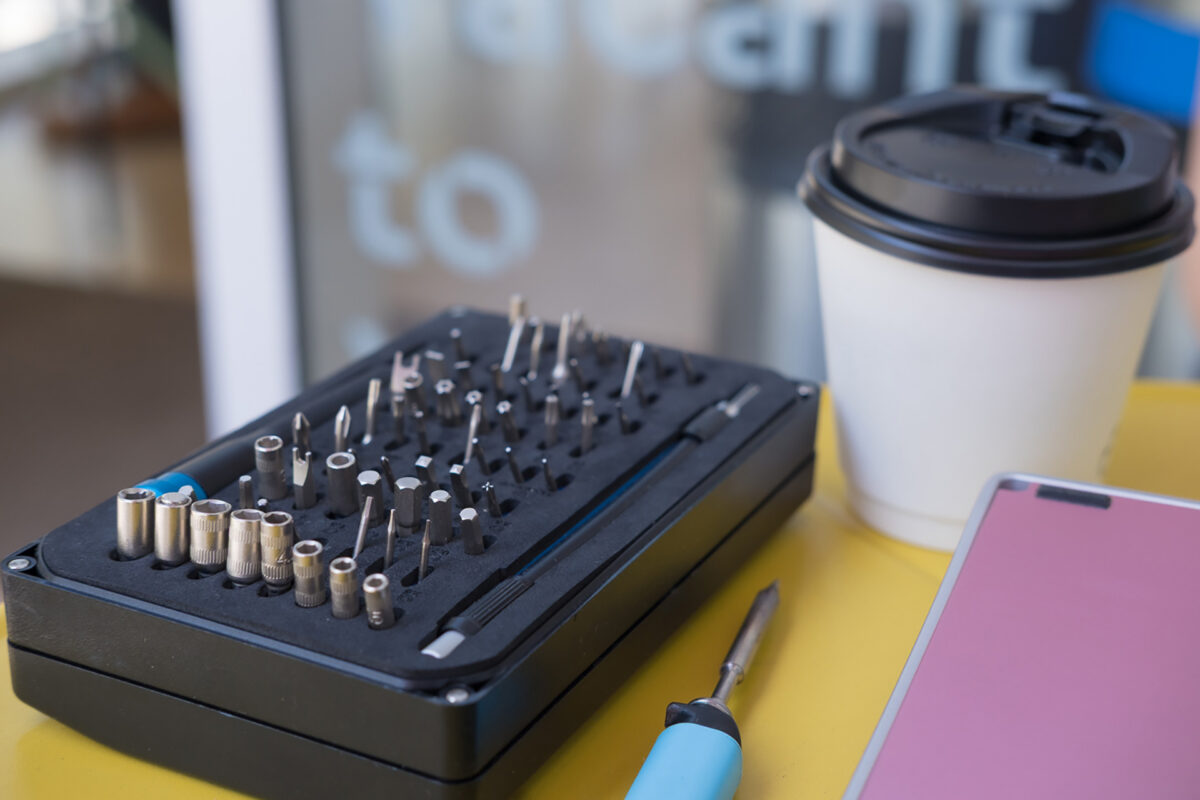
Looking back, it was an interest driven entirely by the pandemic, fueled by time and the practical need for a functional keyboard: Twitch streams taught her all about keyboards and modifying them, and the online community thrived with people just starting to work from home. Eventually, she offered to build them for strangers on Reddit, streamed them on Twitch, created a Discord server, organized meetups on Paper Son Coffee he recorded ASMR videos in San Francisco and it grew from there. “Without irony, I created TikTok – I never thought I would be one of those people who posted – then I took a shower and half an hour later I had 800,000 views,” she recalls.
And like any hobby, you reach a peak and then start to re-evaluate your choices and spending habits (who here also donated a bunch of money transfers that you never exploit again?). She notes, describing the time she saw a photo of someone’s collection of over 100 keyboards: “At some point it becomes overconsumption.” She still offers builds and some repairs – her best clients have commissioned her builds more than 10 times – but she doesn’t participate in the community as much. Chen is ecstatic with her current setup and is also trying to be online less often. Her view may be familiar to coffee professionals: “At the end of the day, the joke is that it’s the keyboard.” People will ask if it sounds good, sharing all the modifications they’ve made, and others will still say, “It sounds like a keyboard.” He notes, “It’s a keyboard. It tastes like coffee.”

