

Build-Outs of Coffee, our annual summer series showcasing fresh and remodeled coffee shops around the world, comes to an end in 2025. We’ve spent the better part of three months bringing you fresh and thrilling coffee shops, but like Build-Outs, all good things must come to an end.
Before we can officially end this season, there is one more thing to do, which is to take a broad look at the coffee shops featured in Build-Outs of Coffee and try to predict where the industry will go in the coming years. We call it Autumn analytics and this is something that highlights the season that dates back to 2018.
We’re crunching the numbers to find out what changes (or not) you should watch out for in specialty coffee. Some results are surprising, others remain as constant as ever. So let’s take a closer look at the season that, according to the data, was the period of coffee’s development.
Demography
There were a total of 33 Build-Outs this year, which was a truly fair showing, and the overall cafe lineup was largely in line with the megatrends of 2024. Like last year, just over 25% of entries came from outside the United States. This year, nine other countries participated, representing a total of four different continents. These numbers coincide 1:1 with 2024 geographic demographic numbers.
Once again, the coasts showed the best results in the country. Both Miami and the greater Los Angeles area had the largest representation, with three coffee shops each. Meanwhile, northwest Arkansas had two, as did the Seattle/Olympia area.
Who is building?
In previous years, the winners were recognized brands, which accounted for the lion’s share of entries under Build-Outs. But this year tells a different story. The majority of cafes included – as many as 55% – were from first-time cafe owners. There were a few coffee shops, such as Matryoshka in Nashville, that expanded their existing space, but those numbers fell slightly low of an even split. However, this is the first time in our data that fresh café owners have been so dominant in the Fall Analysis. This suggests that the coffee industry will continue to attract fresh entrepreneurs here in 2025, and that people across the country – and around the world – will be eager to get involved in the effort to open their dream coffee shops (and tell us all about it here at Sprudge).
The multi-roasted spirit
If the coffee development is any indication, the resurgence of the multi-roaster coffee shop was just a blip. In recent years, this trend has experienced a mighty comeback, but in 2025 the trend has completely collapsed. Of all the coffee shops featured this year, there was only one (1) multi-roaster, and even they chose to roast their own line of private label coffee, as well as selling many other brands. That distinction belongs to Dayglow, which is also one of the leading multi-roaster coffee shops across America (and winner of the 2019 Sprudgie Award for Best Up-to-date Coffee Shop). But these are the only multifunctional devices.
In fact, this year our series included only six cafes that do not roast their own coffee. This means that 82% of all compilations this year came from roasters. This is a record high percentage. When we look at how this breaks down for coffee shops that are starting their adventure with coffee roasting for the first time, it turns out that coffee roasters have outstripped coffee roasters by a 2:1 ratio to non-roasters.
Equipment
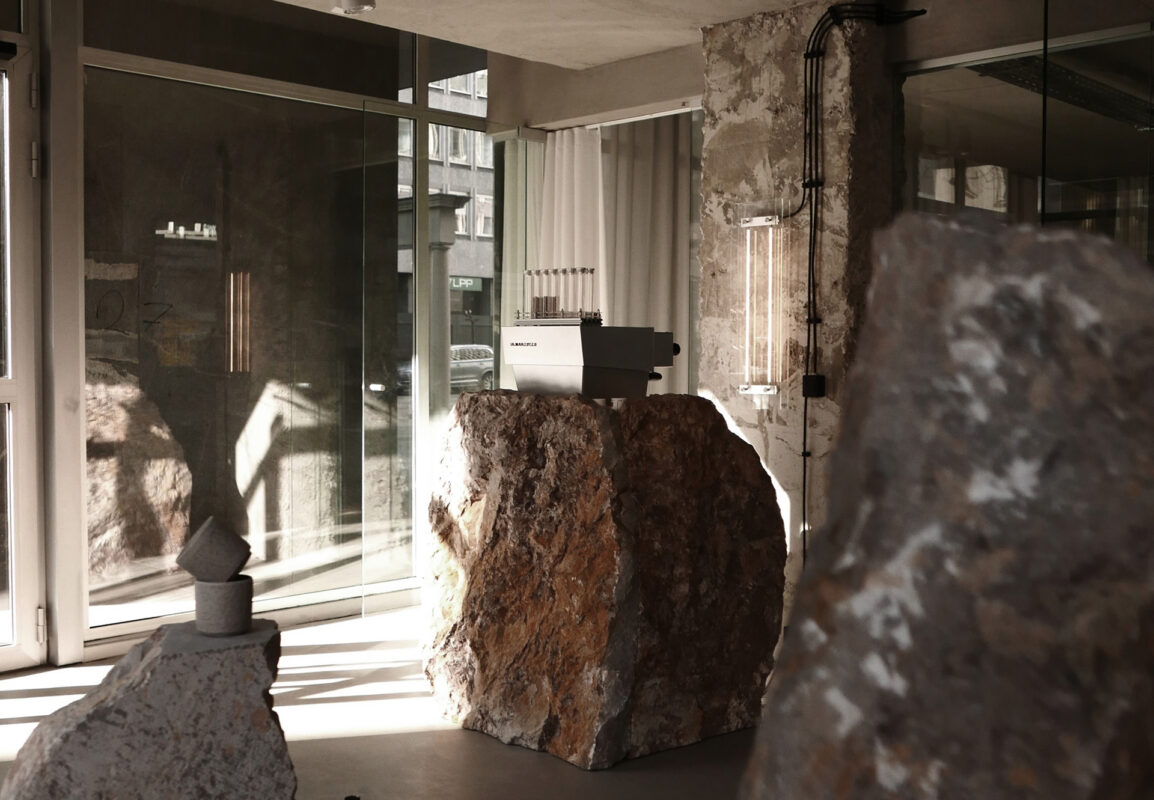
Since we started creating Autumn Analytics, the most popular coffee machine and grinder have not changed a single time. Linea, the iconic La Marzocco espresso machine, and Mahlkönig EK43, the first It Girl grinder for specialty coffee, top the list year after year. So much so that I really should save myself the trouble and copy and paste the previous year’s results. So when I say, I was shocked that neither Linea nor EK took top spots in their category this year, both were beaten by a surprising newcomer. Is this a sign of a seismic changing of the guard?
No, no, it’s not because something like this has never happened. Linea and EK are still kings by a immense margin. But it was fun to pretend for a while.
Linea alone accounted for more than half of all coffee machines this year, 17 of the 33 listed. The closest competition is the Slayer Steam, Mavam Mach 2 and Strada, another La Marzocco machine, all three of them. In total, La Marzocco produced 73% of the machines for this year’s class (including two Modbars).
Perhaps the only real surprise with the espresso machine data this year is that Victoria Arduino only had one entry this year. They tend to be stronger, landing in the top three among all Build-Outs coffee machines in most years. But not in 2025.
Things get a little murkier on the grinder side. Coffee shops are not as overloaded with equipment as they were in the heyday of specialty coffee, where people wrote down all the equipment and their specific purposes. This is especially noticeable in the case of grinders, where some people list our grinders without specifying whether they are intended for espresso or bar apply, sometimes specifying only the brand and not the model. That’s why we lump all grinders into one category.
Once they are replaced, EK is the clear favorite. This alone accounts for 22% of all grinders, followed by another Mahlkönig, E65, with 11%. In total, the German manufacturer accounts for 47% of the grinders in this year’s edition of Build-Outs.
A notable newcomer to the list is Swan, La Marzocco’s entry into the commercial grinder market, which had four entries this year, putting it in third place. Another essential finding is the overabundance of brands represented. Arco, Bentwood, Bunn, Ceado, DF64, Ditting, Eureka, Fiorenzato, Mazzer, Nuova Simonelli, Varia, Weber. Unlike coffee machines, the field for grinders opens up in a massive way.

Looking to the future
Perhaps more than any other year, the 2025 edition of Build-Out of Coffee seemed particularly trend-free. For example, last year we saw a lot of fresh coffee shops presenting a specific point of view from newcomers who were opening coffee shops in whatever space was available to them. It was kind of like the beginning of something. This year, the only significant trend is the resurgence of coffee roasteries, to the detriment of multi-roasters.
And it’s tough not to look at all this through the prism of the uncertainty the coffee world is currently experiencing. Coffee prices fluctuate wildly, tariffs (and the threat of tariffs) wreak havoc, etc. The resurgence of roasteries, many of which roasted for years before opening bricks and mortar, is a proof of concept. There are not many roasteries, many of which are relegated to international roasters, which is currently either impossible or too high-priced. Can everything have the same cause? Could uncertainty be the cause?
The closest equivalent to 2025 is 2021, another season of uncertainty. The world was waking up to Covid-19, and when it came to fresh cafes, it meant a mighty shift towards roasteries. Perhaps it will be something similar to what we are experiencing this year. But whether it was just a blip or the beginning of a larger trend, time will tell.
Thanks for watching the 2025 Coffee Compilation! We’ll be back in 2026 with another round of fresh cafes and thrilling renovations from across the wide world of coffee.

