
Torque Coffee logo. All images courtesy of Torque Coffee.
Reflecting decades of pent-up progressive energy in the specialty coffee industry, a recent coffee roasting company has emerged called Torque Coffee wants to be a driving force for changes in the value structure of the coffee market.
Specifically, the company sets the purchase price of high-quality green Arabica coffee based on its value, not its cost.
Torque Coffee, founded by veteran roasters Nanelle and Andy Newbom in San Diego, is based on a model the Newboms call “proportional pricing,” in which coffee growers or producers receive a fixed percentage of the retail price of the roasted coffee.
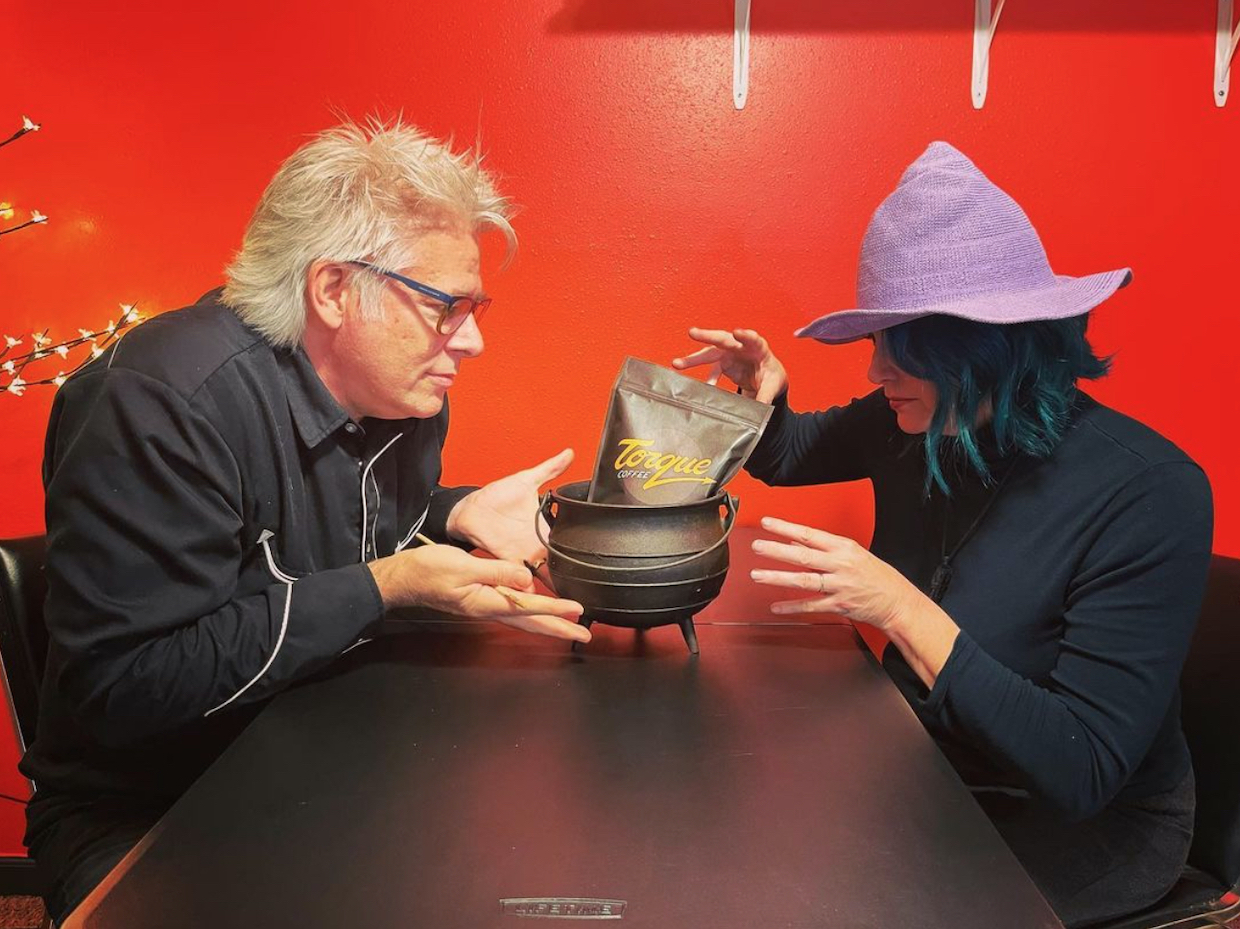
Torque Coffee founders Andy and Nanelle Newbom.
In brief, producers receive 20% of the retail price of Torque Coffee bags, which currently cost $20. After accounting for shrinkage losses during roasting and other costs, the farm-level price paid to farmers is $4.75 per pound of green coffee. Adding symmetry to the equation is that 20% is the same proportion per bag that Torque considers a profit.
In interviews with DCN, the Newboms said the model was designed specifically to challenge prevailing norms of coffee purchasing, in which the distribution of value heavily favors roasters and retailers over producers, a result of conventional market structures such as commodity pricing.
“We want to operate promotional pricing to break the supply chain,” says Andy Newbom, co-author of the book Spanish Coffee for Coffee Buyersrecently told DCN. “The whole point is that the market is not broken. It’s not broken, but the price is anchored or bolted to the producers. And then, on the other side, it’s not anchored anywhere. So the only way to really make the supply chain work — to give it a little balance, a little equilibrium — is to bolt it on at both ends.”
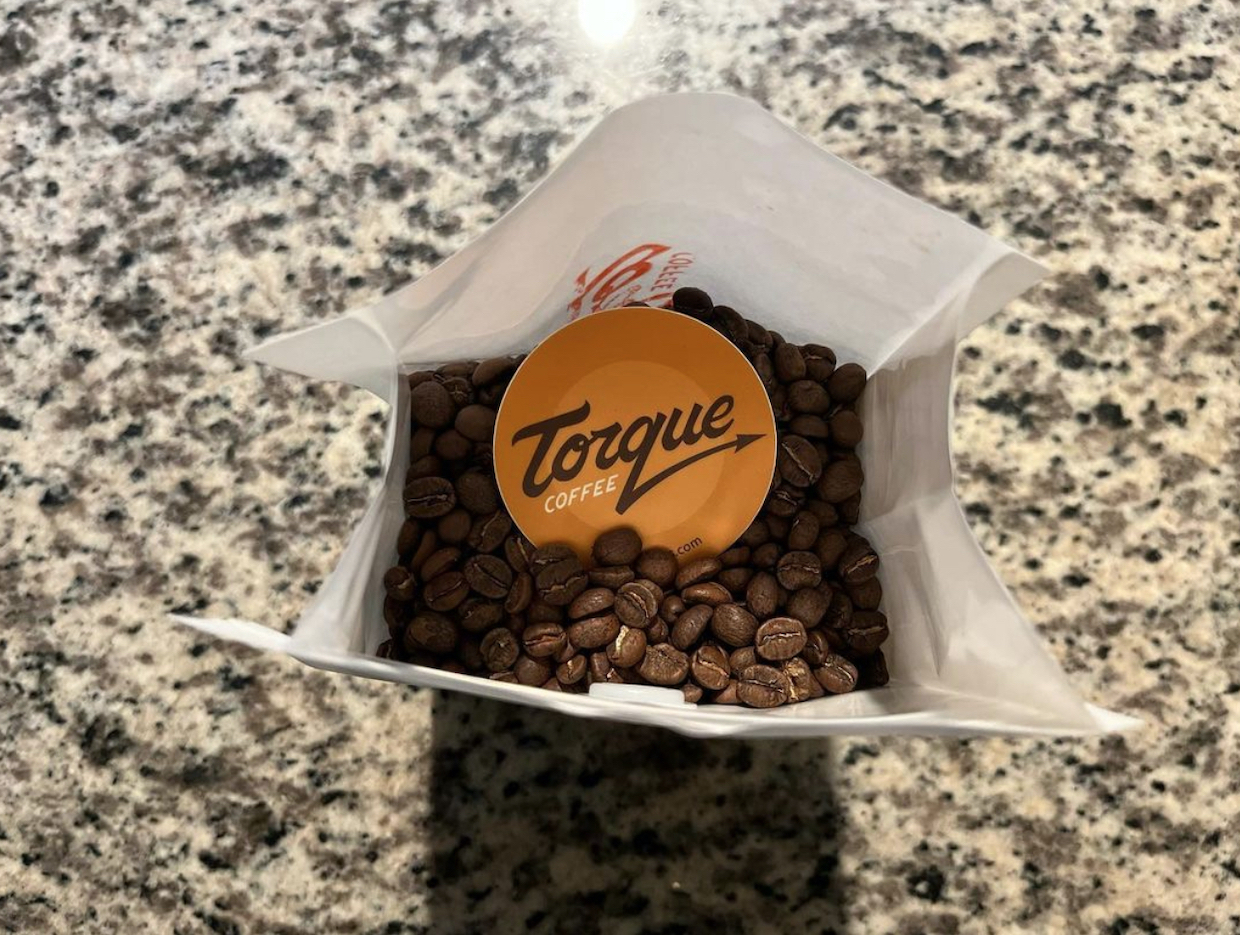
Nanelle Newbom leads the company’s coffee roasting operations California Coffee Collective in nearby San Marcos, California. With compostable packaging, a recent Torque offering is released every two weeks for single purchases or discounted subscriptions, shipped in reusable boxes.
The company’s first deals were made possible by “spot purchases”—that is, purchases of green coffee that importers already had in stock. A standard practice among coffee roasters, spot purchases also put Torque in the strange position of having to figure out how to retroactively pay producers more to meet the $4.75-per-farm threshold.
In the future, the Newboms plan to leverage their two decades of contacts in the specialty coffee industry to buy coffee through futures contracts, a strategy often unattainable for a roastery of this size.
“We’ve talked to importers and they say, ‘Wait, you want to pay more than you have to for coffee? Are you crazy?’” Andy Newbom said of spot buying. He likened the experience to the early days of the “direct trade” movement, in which roasters were willing to augment their spending and pay more for coffee in pursuit of better quality, as well as more meaningful relationships with producers.
One of those early direct-to-consumer pioneers was Barefoot Coffee Roasters, which Andy and Nanelle Newbom co-founded in 2003 before eventually selling the business. Since then, the pair have immersed themselves in the worlds of both specialty coffee and craft beer.
Nanelle Newbom described Torque’s long-in-development model as a kind of gateway for other coffee companies to start rethinking value in their supply chains.
Andy Newbom has described the Torque model as evolutionary, following the advances made by the “direct trade” or “third wave” coffee movements.
But Newbom added that much of the sustainability terminology associated with direct trade and third-wave coffee movements has essentially been thrown around, both by well-meaning individuals and opportunistic marketers.
“Ethical, sustainable, responsible, straightforward — all those vague words — don’t lend a hand consumers anymore,” said Andy Newbom. “We don’t have pictures of farmers on our website, pictures of coffee, smiling faces at the place of origin. We’ll never have that because we don’t sell that. We sell coffee and we just say we pay the producer 20 percent. That’s it.”
Does your coffee business have news to share? Let DCN editors know here.
Nick Brown
Nick Brown is the Daily Coffee News Editor at Roast Magazine.
- Roasting
- California/Pacific